

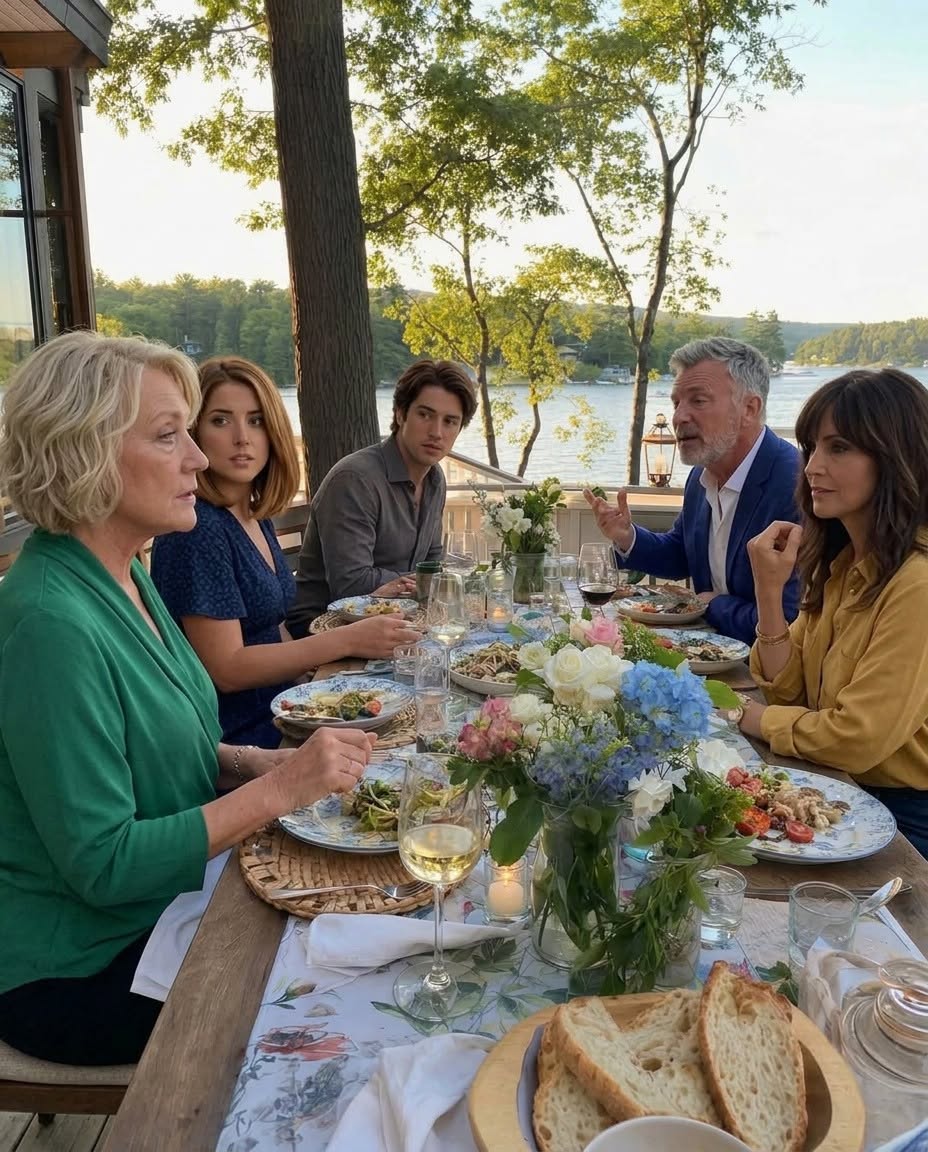
I told them what Claire had built.
She had created a successful career in a difficult industry without financial help. She had established herself in a city far from home and earned the respect of people who knew far more about the world than expensive watches and elegant dinners.
“And she chose your son,” I said. “He is kind, and he is ashamed of how you are behaving. That tells me you raised him better than you are behaving tonight.”
I explained that their grandchildren would not grow up believing Brussels mattered more than Rochester.
They would learn that their grandmother once travelled alone to a foreign country with one suitcase and created a life for herself.
“That is the cultural foundation I intend to give them,” I finished. “I believe it will serve them well.”
Then I picked up my fork and switched back to English.
“This is excellent, sweetheart,” I told Claire. “The sauce is perfect.”
The silence that followed was deeply satisfying.
But Philippe did not storm away.
Instead, he placed down his knife and fork.
“Madame Doyle,” he said in English, so Claire could understand, “you are right. I am ashamed.”
I had expected anger or wounded pride.
Instead, he publicly admitted what he had done.
“We hid behind our language because being cruel was easy when we assumed no one understood,” he said. “Claire, what I said was untrue and cowardly. You welcomed us graciously, and I repaid you with disrespect.”
Hélène began crying.
“I called you simple,” she admitted. “But you frightened me because Luca loves you more deeply than he has ever loved us.”
Claire asked why that frightened her.
Hélène answered honestly.
She feared losing her son to a warmer family. Rather than admit that fear, she decided Claire was beneath them.
Her honesty did not excuse the cruelty.
But it changed what happened next.